 astrophysics data system
From Collaboration to Curation: Building NASA Astrobiology’s Living Bibliography in SciX
Jenny Koch (SciX Digital Librarian) and Jennifer Lynn Bartlett (SciX Project Scientist for Astrophysics)
05 May 2026
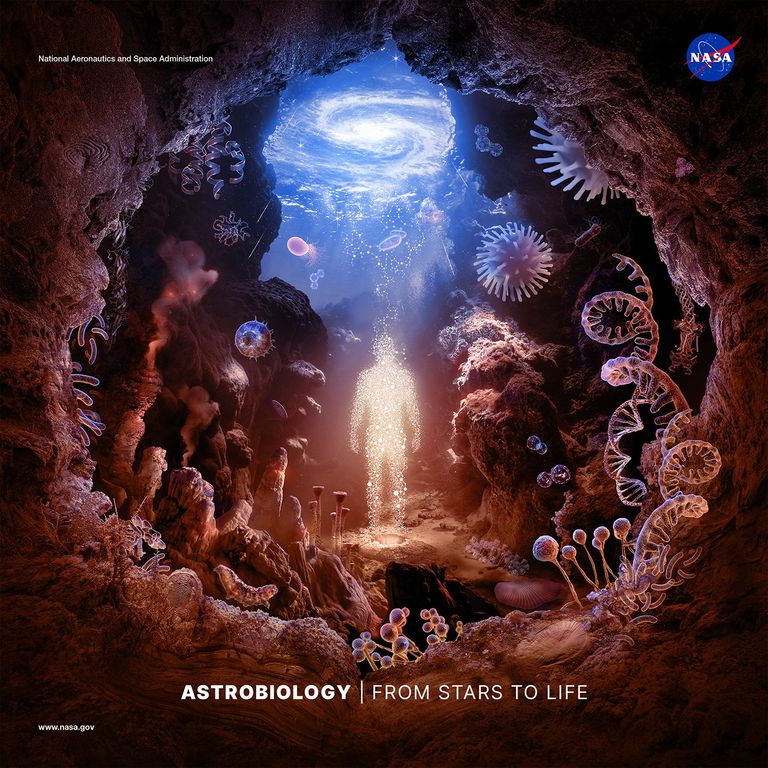 Keeping track of scientific publications sounds straightforward - until you’re working in a field as interdisciplinary as astrobiology. Astrobiology sits at the intersection of astronomy, geology, chemistry, biology, and planetary science, which means its research is scattered across a wide range of journals, repositories, and formats. For teams trying to maintain a comprehensive, up-to-date bibliography, the task quickly becomes an ongoing challenge.
With the launch of Science Explorer (SciX) and its growing focus on interdisciplinary science, we’ve had the opportunity to collaborate with the NASA Astrobiology Program to rethink how their publications are tracked, curated, and shared. What began as an effort to streamline internal tracking has evolved into something much more impactful: a living, publicly accessible NASA Astrobiology bibliography that now helps power how the program shares its research with the world.
Building the Astrobiology Library
The collaboration came together pretty organically. We connected with the NASA Astrobiology team to discover more literature to add to our growing collections. We compared notes on publication tracking workflows, and quickly found a path forward that built on what they were already doing - just with a bit more automation and structure layered in.
It started with a simple CSV list of publications maintained by the Astrobiology team. From there, we developed a Python-based workflow to transform that list into a fully realized SciX library. Using the SciX API, we first check which publications already exist in the system. For anything missing, we generate new records using curation-focused scripts that clean, standardize, and enrich the metadata. Once everything is in place, we use the API again to maintain a dedicated SciX Library that brings the full set of NASA Astrobiology publications together in one place. The Astrobiology team now includes us on their monthly publication digest, which means this isn’t a one-time effort - it’s a sustained, evolving collaboration that keeps the library continuously up to date.
At its core, this project is driven by a simple goal: to make astrobiology research more findable, organized, and usable. Through SciX, we’ve built a library that aggregates publications from multiple sources, normalizes metadata, and ensures consistency across records.
One of the most rewarding outcomes of this collaboration is that the SciX library is no longer just an internal tool. It now serves as the publications bibliography featured on the NASA Astrobiology website, providing a reliable, continuously updated resource for researchers, collaborators, and the public.
Using the Astrobiology Library
As a researcher, you can access the Astrobiology library via the link here or from the “For Researchers” dropdown menu on the NASA Astrobiology Program home page.
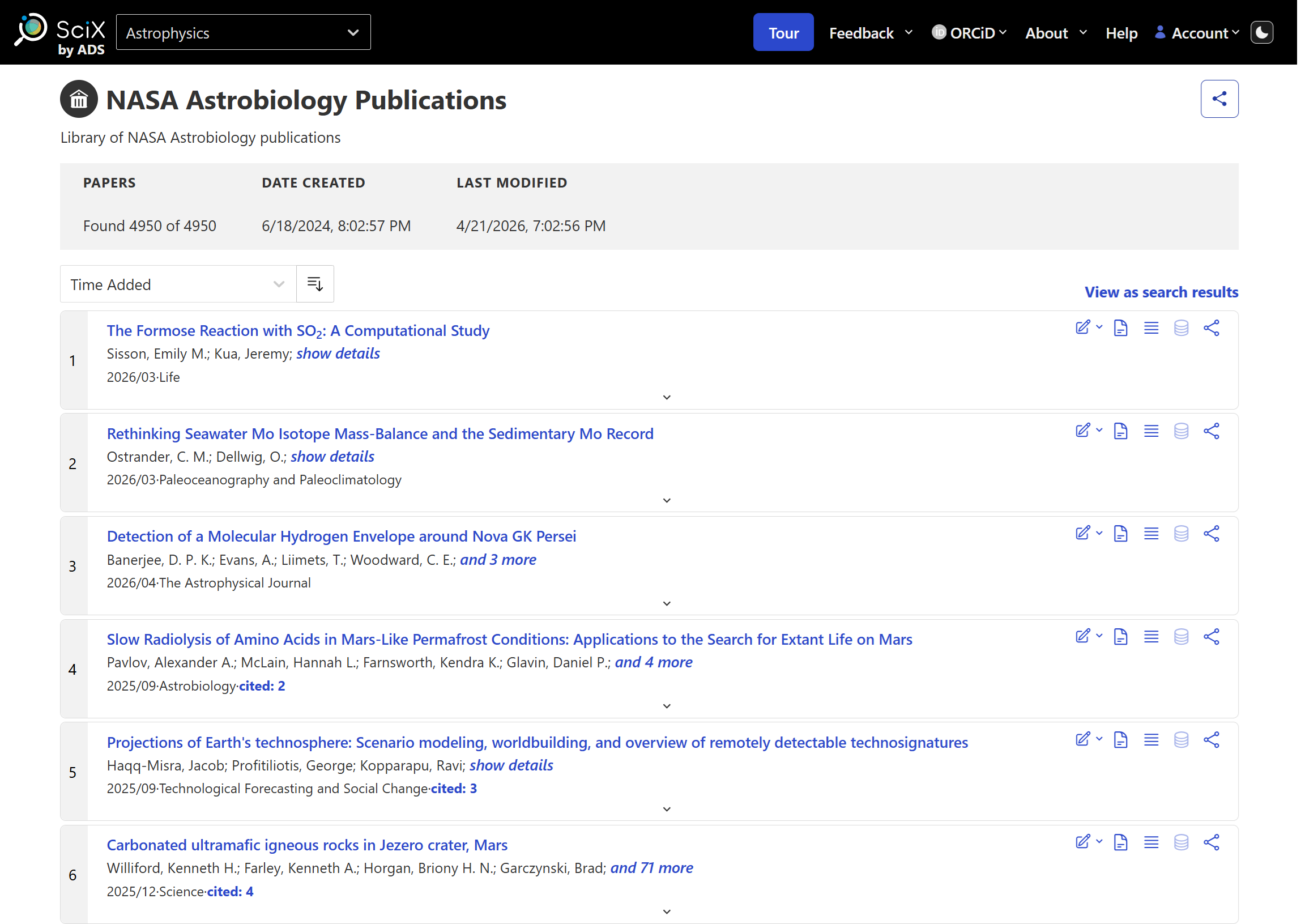
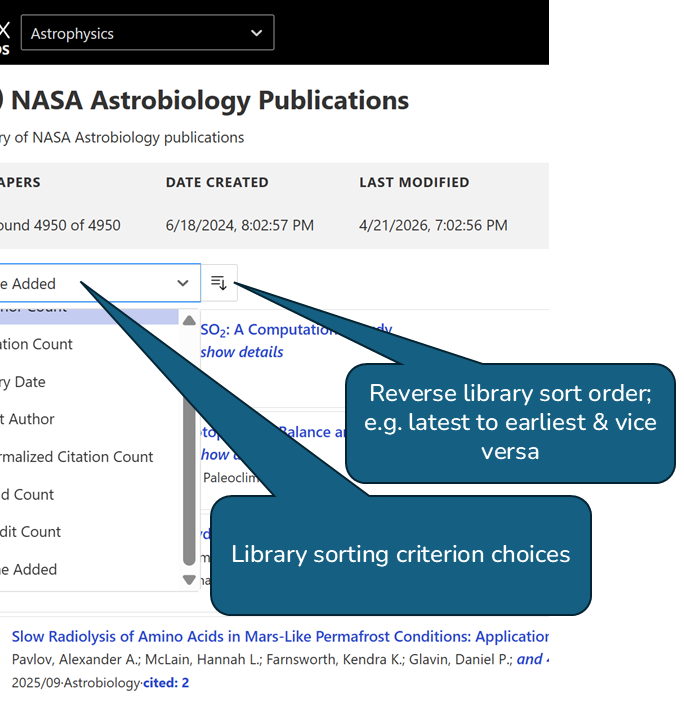
Within the Astrobiology library view, you can sort the papers several ways, including Time Added to see the latest additions to the library, Date to see the latest publications, or First Author to find a specific paper.
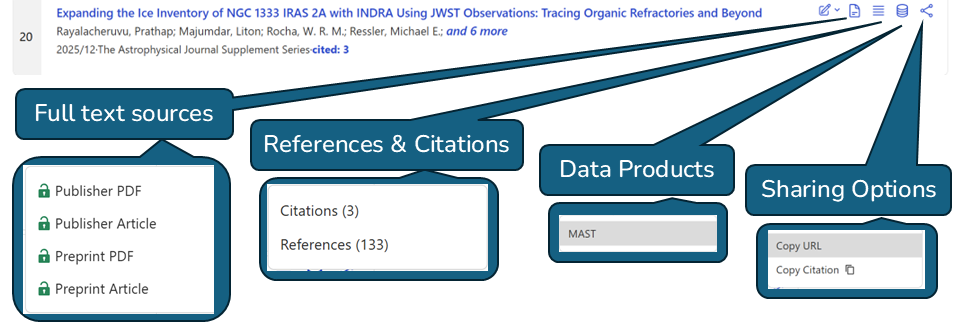
The icons on the right side of each individual entry provide you quick links to the abstract, full text, references and citations, data products, and copied URL or citation. Here you can quickly initiate the most common requests with regards to the astrobiology literature.
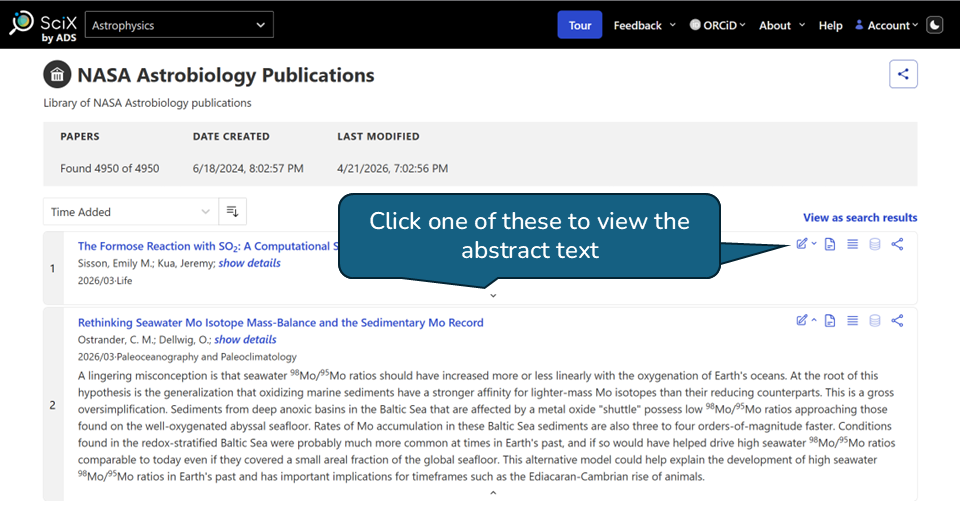
To read the abstract of any paper, you can click on the down caret or the notetaking icon. If you click on a paper’s title, you can explore all the resources of our full-featured Abstract View of that paper. The individual abstract view is a hub for identifying and accessing a wealth of resources related to that particular astrobiology resource.
“View as search results” takes you out the library view and into a standard SciX results view, where you can apply filters, visualize relationships (authors, papers, metrics, concepts), and request papers based on their relationship to those in this library or a subset of it (similar, review, useful). Here you can perform a thorough literature review of an astrobiology topic or otherwise engage with the astrobiology literature in a more individualized manner.
For more assistance with using SciX libraries or to get started creating your own, review our help section starting with “Creating and Editing a Library.”
Questions or feedback? Contact us at adshelp@cfa.harvard.edu.